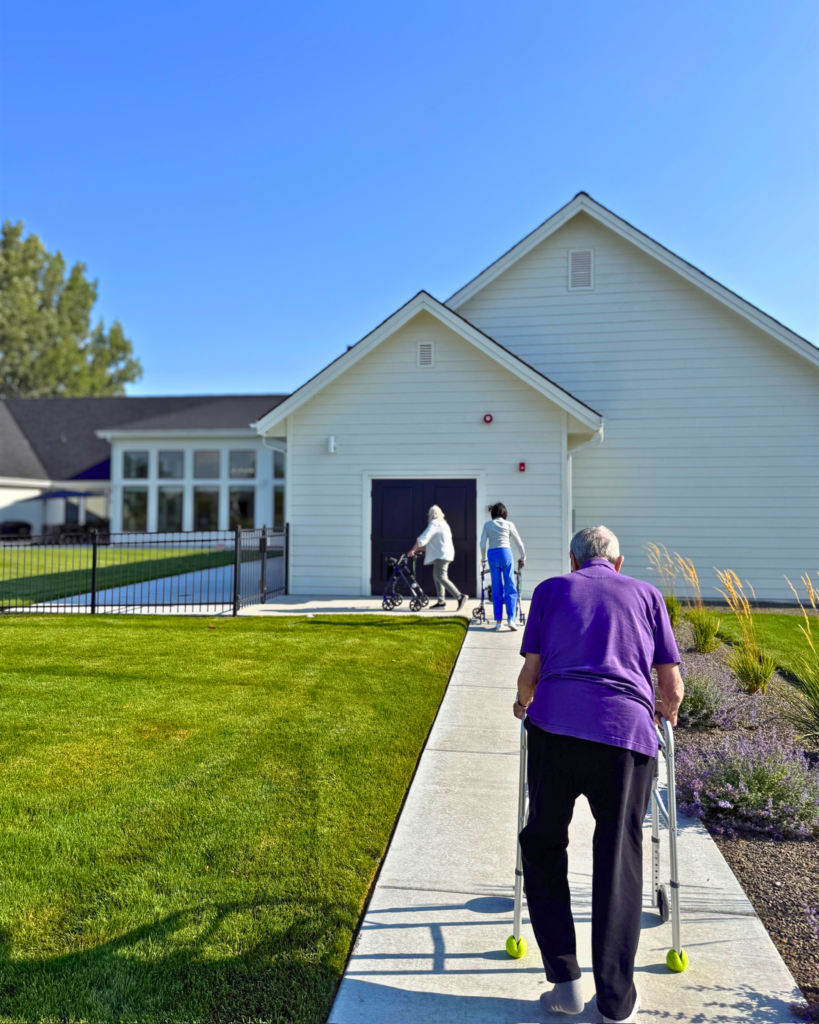

Most families think about assisted living in terms of meals, medication, and safety checks. But there’s a quieter piece of daily life that matters just as much: movement. The walk to the dining room. Standing up from a favorite chair. Reaching for something on a shelf. These small, ordinary motions are where independence actually lives and where confidence quietly starts to fade if no one is paying attention.
At The Ponderosa Estate, movement isn’t treated as a separate program tacked onto the day. It’s built into the rhythm of daily life itself.
Why Movement Matters More Than People Realize
Strength and balance don’t disappear all at once. They fade in small increments: a slightly slower walk, a hand that reaches for the wall a bit more than it used to, a chair that takes two tries to stand up from instead of one. Regular movement helps preserve muscle strength, coordination, and balance, but it also does something less obvious: it protects a person’s sense of independence. Someone who can still walk to their own table, water their own plant, or answer their own door carries themselves differently than someone who has quietly stopped trying.
The Truth About Falls
Falls are one of the most common and most preventable risks for older adults, and they rarely happen out of nowhere. Usually there are small signals first: a hesitation on stairs, a hand that lingers on furniture while crossing a room, a favorite walk that stops happening. Families often notice these changes without naming them. The shift can look like caution rather than decline, which is part of why it’s easy to miss.
This isn’t about frightening families. It’s about paying attention early, while there’s still room to build confidence back rather than simply react after a fall happens.
How We Build Movement Into an Ordinary Day
We don’t run a gym class and call it done. Movement at The Ponderosa Estate is woven into things that already feel like normal life:
- Walking to meals rather than having trays delivered, for Residents who are able
- Garden paths that invite a short walk instead of a scheduled “exercise hour”
- Gentle, seated stretching worked into the activities calendar
- Staff who know each Resident’s ordinary gait well enough to notice when something’s different
- Coordination with outside physical therapy when a Resident needs more targeted support
None of this feels clinical. It feels like a home where people are still moving through their own day.
What a Smaller Community Makes Possible
With only 16 private suites in Eagle, Idaho (83616), our caregivers aren’t managing a rotating shift of unfamiliar faces. They know how each Resident normally walks, stands, and moves through a room which means a small change gets noticed in days, not months. That familiarity is the real foundation of fall prevention. It’s not a device or a checklist. It’s a caregiver who knows what “normal” looks like for the person in front of them.
Questions to Ask About Physical Wellness on a Tour
- How does your staff notice changes in a Resident’s balance or gait?
- Is movement built into daily life, or only offered as a scheduled activity?
- How do you coordinate with outside physical or occupational therapists?
- What happens after a fall: how is the family looped in, and how does the care plan change?